Do I Need a Glazier for a Plate Mirror with Outlets and Sconces Through It?
Bathroom design often hinges on seemingly small decisions that significantly impact functionality and aesthetics. One common question arises when integrating lighting and power into mirrors: Do I need a glazier for a plate mirror with outlets and sconces through it? This post unpacks that query, guiding you through mirror types, lighting placement, and the crucial roles of specialists like glaziers and electricians.
Understanding Mirror Types: Functional Decisions Beyond Looks
Mirrors in bathrooms are rarely just decorative—they serve multiple functional roles including shape optimization, storage options, mounting methods, and lighting integration. The National Kitchen & Bath Association (NKBA) underscores the importance of selecting mirror types that align with the overall bathroom workflow and lighting needs.
Plate Mirrors vs. Frameless and Storage-Integrated Mirrors
- Plate Mirrors: These are flat slabs of plate glass, often custom cut, generally mounted directly to the wall or with clips. Their clean, large surface works well in lighting integration but demands precision, especially when incorporating hardware like outlets or sconces.
- Frameless Mirrors: Similar to plate mirrors but polished edges distinguish them. They pair well with modern and minimalist aesthetics but have limited options for mounting through the mirror.
- Mirrors with Storage: Cabinets or medicine cabinets that incorporate mirrored fronts offer storage but limit the flexibility for cutting out spaces for outlets or lighting penetrations.
Lighting Integration Is a Major Functional Decision
Before selecting any mirror, consider your lighting scheme:
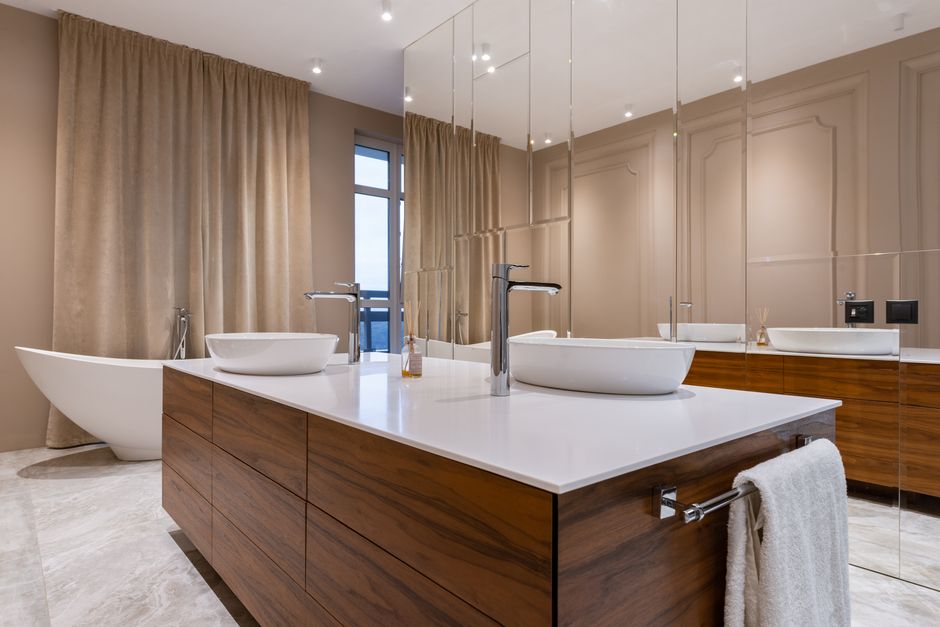
- Backlit Mirrors: LED strips mounted behind the glass provide ambient glow; minimal penetrations are needed.
- Front-Lit LED Mirrors: Some plate mirrors integrate LED lighting behind a frosted edge or etched design; wiring and controls must be coordinated with electricians.
- Sconces Mounted Through Mirrors: This is the trickiest technically and aesthetically; requires precise cutouts in the mirror allowing the lighting fixture (such as from Golden Lighting) to feed through the glass.
Verdict: Mirror and lighting choices are inextricably linked. Decide lighting layouts before mirror dimensions.
Why Mirror Sizing Ties to Lighting Layout
It's a mistake to pick a mirror’s width and height without considering lighting—particularly if you want sconces mounted through mirror or mirror cutouts for outlets. Ill-conceived sizing can crowd your sconces, cause awkward spacing, or make outlets impossible.
Sizing Strategies According to NKBA Standards
Parameter Recommended Dimension / Rule Reason Mirror Width 4-6 inches narrower than vanity width (2-3" clearance per side) Allows space for sconces or outlets without crowding mirror edges Sconce Spacing 28-36 inches apart horizontally Provides balanced, shadow-free task lighting Mirror Height Match user needs: typically 36-42 inches Allows appropriate reflective area and accommodates lighting fixture heights Sconce Height 60-66 inches from finished floor Avoids shadows and aligns with average face height for flattering illuminationNotice the coordination required: your mirror width must anticipate space for sconces or cutouts for power outlets. Selecting oversized mirrors without this consideration risks crowding or impractical installation.
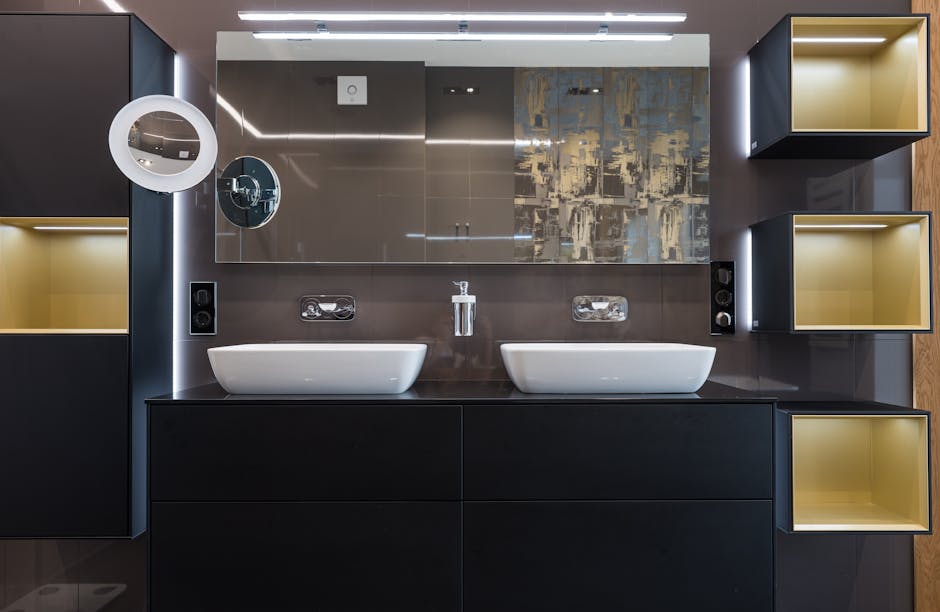
Placement Heights and Sconce Spacing: Balancing Task and Ambient Lighting
Proper sconce positioning ensures effective task lighting on the face without causing glare or shadows. The general rule is 60 to 66 inches from the finished floor https://www.architecturelab.net/types-of-bathroom-mirrors/ to the sconce center, adjusted depending on the users' average heights.
Spacing Sconces Through Mirrors: A Technical Challenge
When planning sconces mounted through mirror glass, the mirror becomes both a reflective and structural component. The sconce’s backing plate and necessary wiring require precise cutouts—this is where a glazier’s templating skills are critical.
- Even small misalignments cause gaps, stress fractures, or leaked moisture at unsealed edges.
- Many lighting manufacturers such as Golden Lighting produce sconces with standardized mounting hardware that affects cutout sizing.
- The electrician coordinates the wiring feed-through behind the mirror and inside the wall.
Task Lighting vs Ambient Lighting: Complement, Don’t Replace
Task lighting (like sconces) provides focused light on the face for shaving, makeup, or grooming—aimed to minimize shadows. Ambient lighting fills the room generally. Combining ambient light (often ceiling-mounted or backlit mirrors) with task sconces yields well-rounded illumination.
Working with retailers like Lumens helps you explore fixtures and lighting solutions geared toward balance and design cohesion.
The Roles of Glazier and Electrician: Who Does What?
Now to the core question: Do I need a glazier for a plate mirror with outlets and sconces through it? The short answer: Yes, almost always.
What a Glazier Does
- Templating: The glazier takes precise measurements and templates where outlets, sconce mounts, and cutouts will go on the glass.
- Custom Cutting and Polishing: Glass cutters and polishers craft exact holes or notches that maintain structural integrity.
- Sealing and Mounting: The glazier ensures edges are sealed against moisture—critical to prevent failures in humid bathroom environments.
Mirror surfaces with penetration points for wiring or mounts are stress points. Without qualified glass fabrication, you risk cracking, moisture ingress, and safety hazards.
What the Electrician Does
- Wiring Hardwired LED Mirrors: Supplying power to integrated or hardwired LED lights behind or within mirrors.
- Adding Power Feeds for Outlets in Mirrors: Installing GFCI-compliant outlets cut through the mirror’s plate glass for convenience.
- Coordinating With Glazier: Collaborating on conduit location, junction boxes, and final fixture installation.
Demister yes. Dashboard maybe. Be sure your electrician maps feeds before glass is templated.
Why Skip the DIY and Go Pro?
- One millimeter off in measurement can mean a $500 mirror that doesn’t fit wiring or mounting.
- Low-quality cuts or unsealed edges cause mirror degradation in bathrooms with high humidity.
- Safety and local code compliance demand licensed glaziers and electricians.
Summary: Best Practices for Mirrors with Integrated Outlets and Sconces
- Finalize your lighting plan first. Decide sconce type, spacing, and outlet placements before mirror selection.
- Select mirror size based on lighting and vanity dimensions to allow adequate space around fixtures.
- Engage a professional glazier early for templating and high-precision cutting of the plate glass.
- Coordinate with a licensed electrician for wiring feeds and power integration prior to glass fabrication.
- Prioritize moisture-proof sealing and mounting methods to avoid failures endemic with bathroom humidity.
- Use reputable lighting brands such as Golden Lighting or explore curated options at Lumens.
Through planning and professional collaboration, your plate mirror with outlets and sconces through it can elevate your bathroom’s functionality and style seamlessly.
Got questions or want to share your bathroom lighting challenges? Drop a comment below!